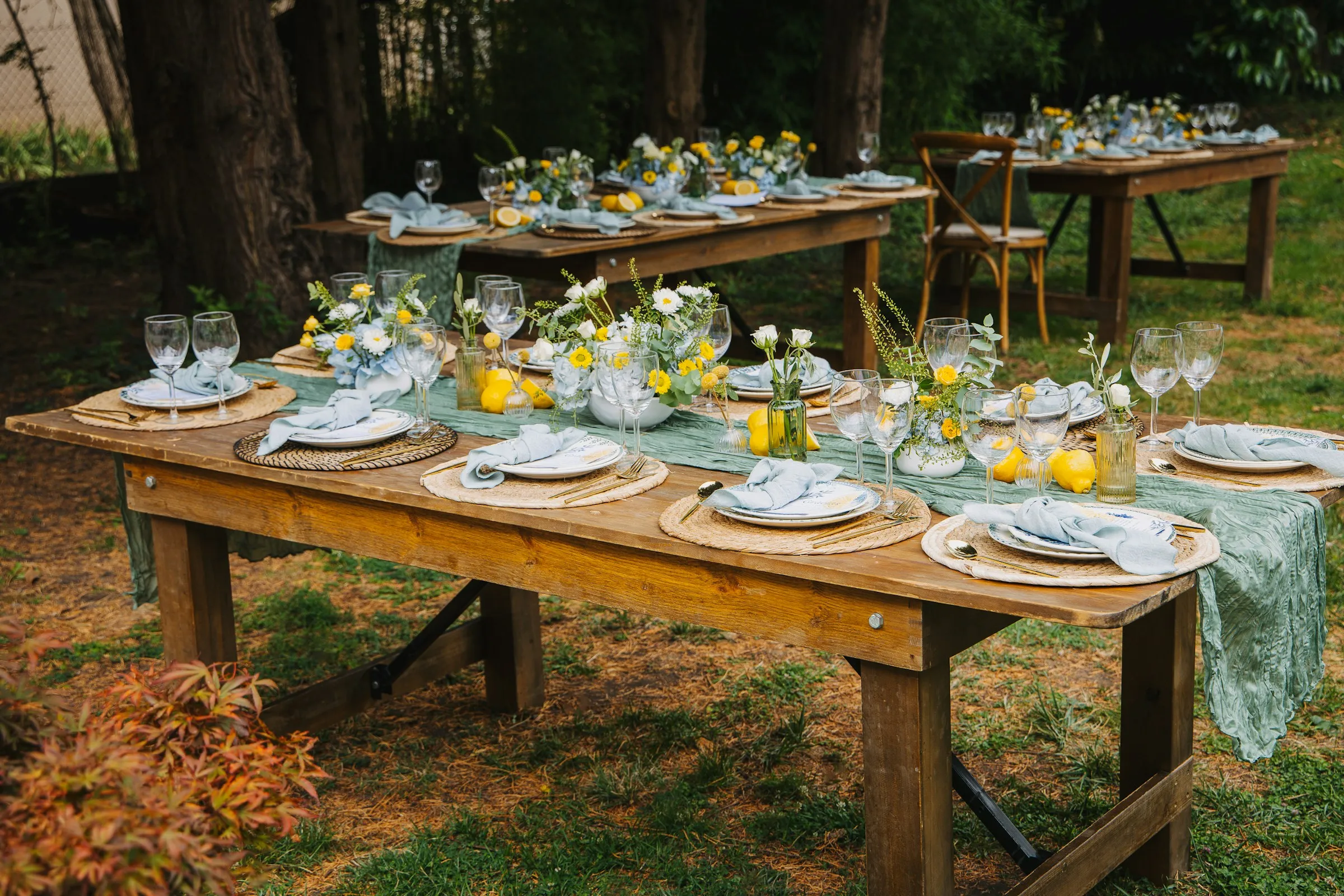
You do not need a finished plan to begin. Start by agreeing who you want there, what you feel comfortable spending and what matters most to you both. Those decisions give you something useful to come back to when the choices start multiplying.
Talk about the day you actually want
Before saving more pictures, each write down three things you would love about your wedding. Perhaps it is a long meal with your closest people, a lively dance floor or enough time to talk to everyone.
Compare your lists. Where they overlap, you have a good starting point. Where they differ, talk about what is behind the preference: a small wedding might mean intimacy to one of you, while a bigger gathering might mean including a far-flung family to the other.
Choose a few priorities together. Keep them somewhere you can both find them.
Set a comfortable spending limit
Decide what you can put towards the wedding without relying on contributions that have not been confirmed. If someone has offered to help, clarify the amount and whether they expect it to cover something specific.
Leave some room for things you have not thought of yet. Keep a separate record of quotes, payments already made and amounts still due, so a deposit does not disappear from your mental total.
You do not need to allocate every pound immediately. First, agree the overall boundary and the parts of the day you most want to prioritise.
Sketch the guest list
Write a first list together before looking seriously at venues. It can change, but even a rough number helps you judge whether a space is a sensible fit.
Consider whether everyone will attend the whole day or whether you want a separate evening invitation. Talk through partners, children and any expectations from family early, rather than handling each invitation as a new exception.
For anyone travelling to Warwickshire, think about the journey home, nearby accommodation and transport between different parts of the day.
Choose a window, then a setting
Decide whether you have a fixed date or could be flexible about the month or day of the week. Think about work, significant family commitments and the kind of celebration you want.
With your guest count, spending limit and rough dates to hand, start a small venue shortlist. Compare the spaces you would actually use, what the hire includes and how the arrangements would work in poor weather.
Take our questions to ask a wedding venue to your first visits.
Make the next step small
Set up one shared place for decisions, quotes and contact details. It might be a spreadsheet, a notebook or a folder you can both access; choose whatever you will keep using.
Agree who will make the next enquiry and when you will look at the replies together. There is no need to spend every evening planning.
A useful plan gives you fewer things to hold in your head, not more things to worry about.
If you are ready for another practical decision, a wet-weather plan is worth thinking about before you commit to an outdoor setting.