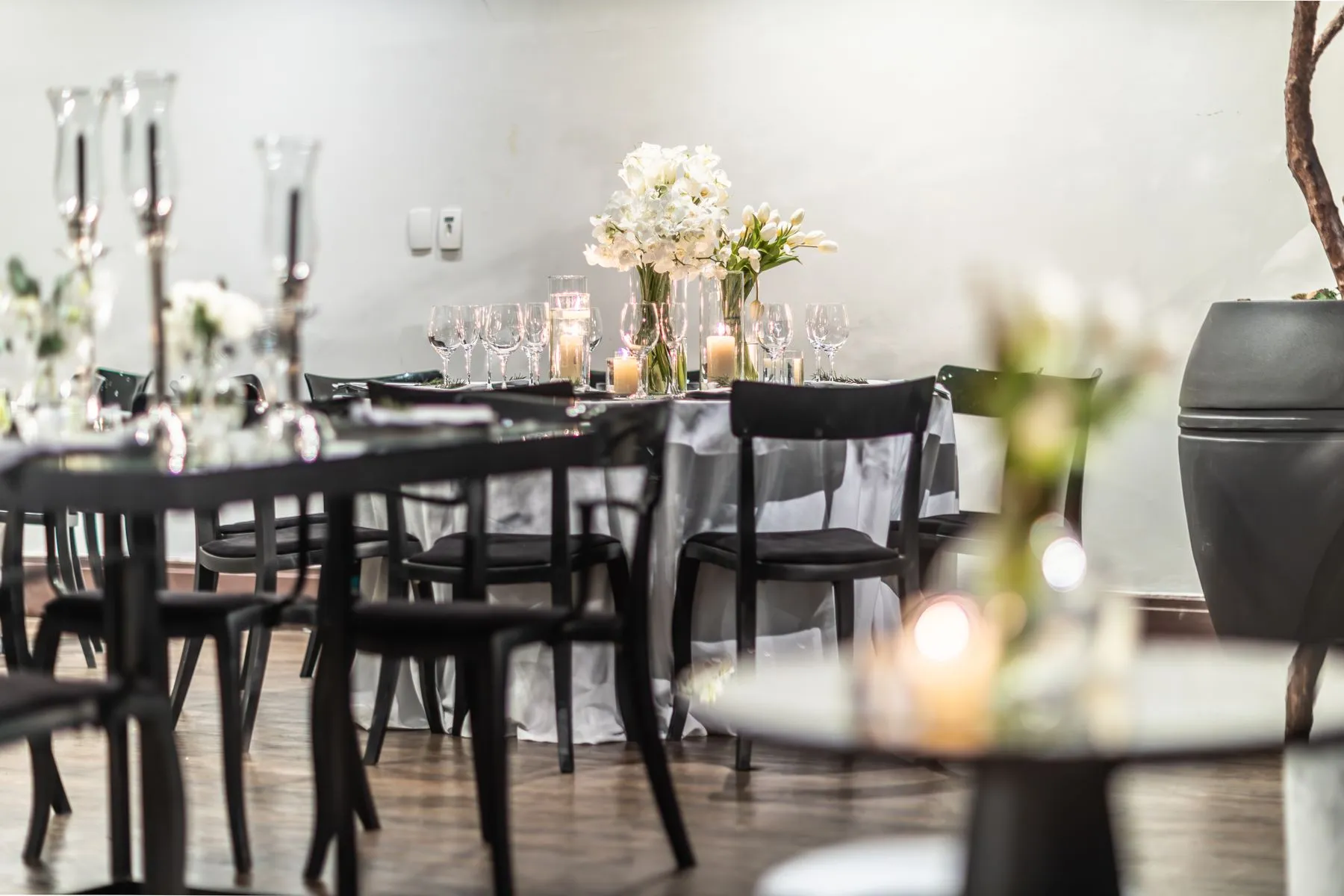
A welcoming wedding table has room for people to sit comfortably, see one another and enjoy the meal. Start there, then add the colours and details that feel right for your celebration.
Begin with the table and the meal
Ask the venue or caterer for the table dimensions, planned guest numbers and a place-setting example. If food will be served on shared platters, find out how much of the centre needs to stay clear.
Check which linen, crockery and glassware are included before hiring anything extra. Existing pieces can give you a useful starting point for the rest of the design.
Choose a small palette
For a softer countryside feel, try an ivory base with muted pink and green. You could carry those colours through flowers, napkins or a small piece of stationery without matching everything exactly.
Look at samples together in daylight. Texture can add interest without adding another colour: a woven napkin, a simple ribbon or paper with a little weight to it.
If you love a bolder colour, use it. A personal choice can sit comfortably within a traditional setting.
Give the flowers enough space
Decide whether you prefer a few fuller arrangements or smaller vessels placed along the table. Ask your florist how the design will work with the table size and food service.
Try a sample layout with plates and glasses in place. Sit down on both sides and check the view across the table. It is a useful way to see whether something beautiful in isolation becomes awkward during a meal.
Our guide to choosing wedding flowers will help you put together a brief.
Add atmosphere carefully
If you would like candlelight, check the venue’s rules first and agree suitable holders and positions. Ask who will light the candles, look after them and clear them away. If flames are not suitable, consider the venue’s lighting options or battery-operated alternatives.
Keep names and table numbers easy to read. A decorative script might look lovely up close but be difficult to follow from the end of a table.
Choose a personal detail, then stop
A handwritten note, a meaningful table name or a small reference to something you both enjoy can make a setting feel yours. You do not need a favour, a menu, a message and a keepsake at every place.
Lay out one complete setting and take a photograph. Share it with whoever is arranging the tables, together with a list of what goes where and who will collect hired items afterwards.
Leave some empty space. Once your guests arrive, the table will have plenty of life of its own.